



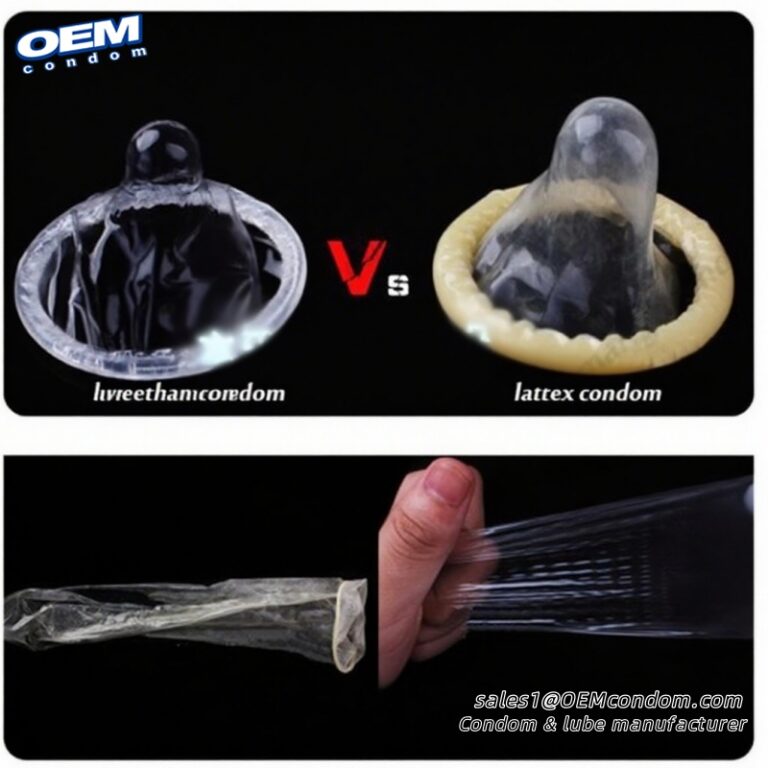
Polyurethane vs. Latex Condoms: Pros, Cons, and Effectiveness
When selecting condoms, understanding the material is crucial.This comparison outlines the key differences between polyurethane and latex condoms to help you make an informed decision. Material Latex: A natural material sourced from rubber trees. Polyurethane: A synthetic material derived from plastic resin. Pros and Cons Latex Condoms ✅ Pros: Lower breakage rate Highly effective at preventing pregnancy Typically more affordable …

Custom condom manufacturing company from Asia
Asia are the main condom production base in the world. Condom products are a very small product in life. There are about 50 manufacturers in the world, and these companies are mainly located in Asia, such as China, Malaysia, Thailand and India. There are also some factories in the European Union and the Americas, but their production capacity has relatively …
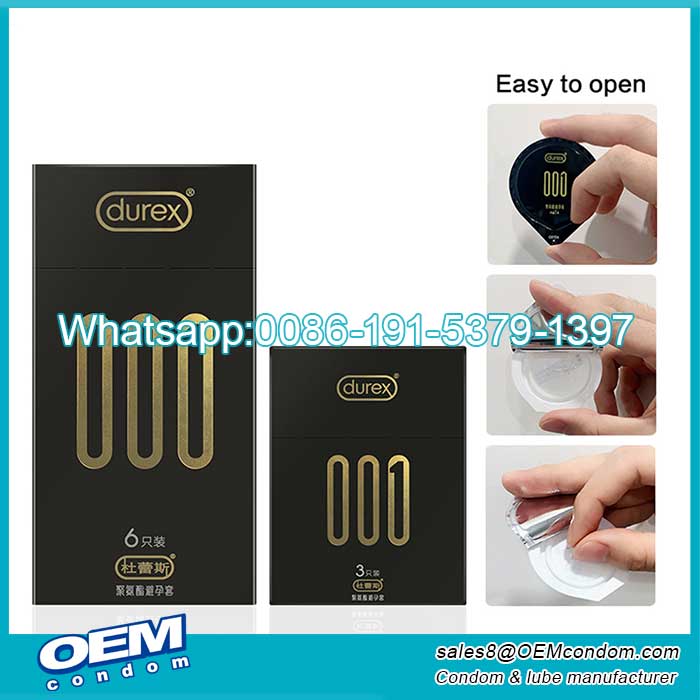
Custom non latex condoms for men and women
Polyurethane condoms are latex-free condoms. Polyurethane condoms are a good substitute for people who are allergic to latex. Some condoms are made of polyurethane and some are made of polyisoprene. Our latex-free condoms are made of water-based polyurethane material. Polyurethane condoms are much thinner than latex condoms. It can bring a natural feeling to the people who use it. Such …

Import polyurethane condoms from China
Polyurethane condoms are primarily manufactured in Japan and China, as these countries lead the world in ultra-thin, non-latex technology. Japan condom factories mainly produce their own brand, and China condom factories mainly produce for OEM orders for global markets. Key Manufacturing Base: Japan: The global pioneer of polyurethane condoms. Major production occurs at plants in Ibaraki, Shizuoka, and Fukushima. Top …

Produce Glove, Protect you.